Keeping kids’ voice levels to a low simmer is no small feat. They’re young, they’re super excitable, and they have a lot to say. If you’ve spent even five minutes in a first grade classroom, you already know this.
As an introvert, I need quiet time to get think-y things done, so I understand the importance of teaching kids how our collective voice levels impact the classroom community.
Awareness is a good place to start. It begins as simply as letting them know, “Sometimes our voices are loud. Sometimes our voices are soft. How do we know when to use each?”
DIFFERENT VOICE LEVELS IN THE CLASSROOM
Many primary teachers use cards to show a variety of voice levels. You may already be using a set in your own classroom. In our world, we have four levels we use when we’re inside.
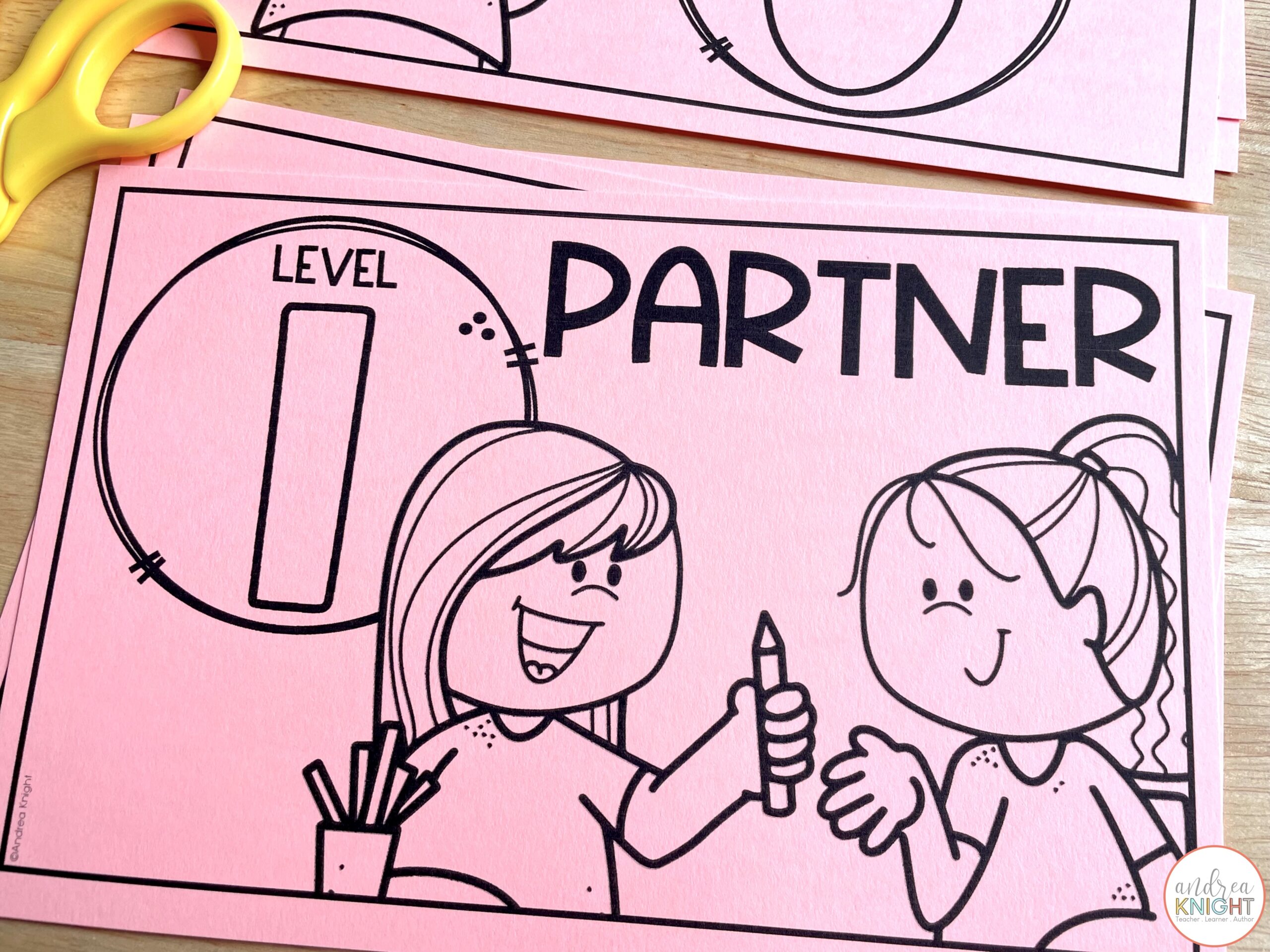
They’re pretty straightforward. And the pictures make it easy for the children to understand the context for each level:
- Level 0: Quiet
- Level 1: Partner
- Level 2: Group
- Level 3: Speaker
All of this, of course, comes with a lot of conversation and modeling, especially at the beginning of the school year. But this year, we added an extra resource to give the kids more specific details about each level.👇
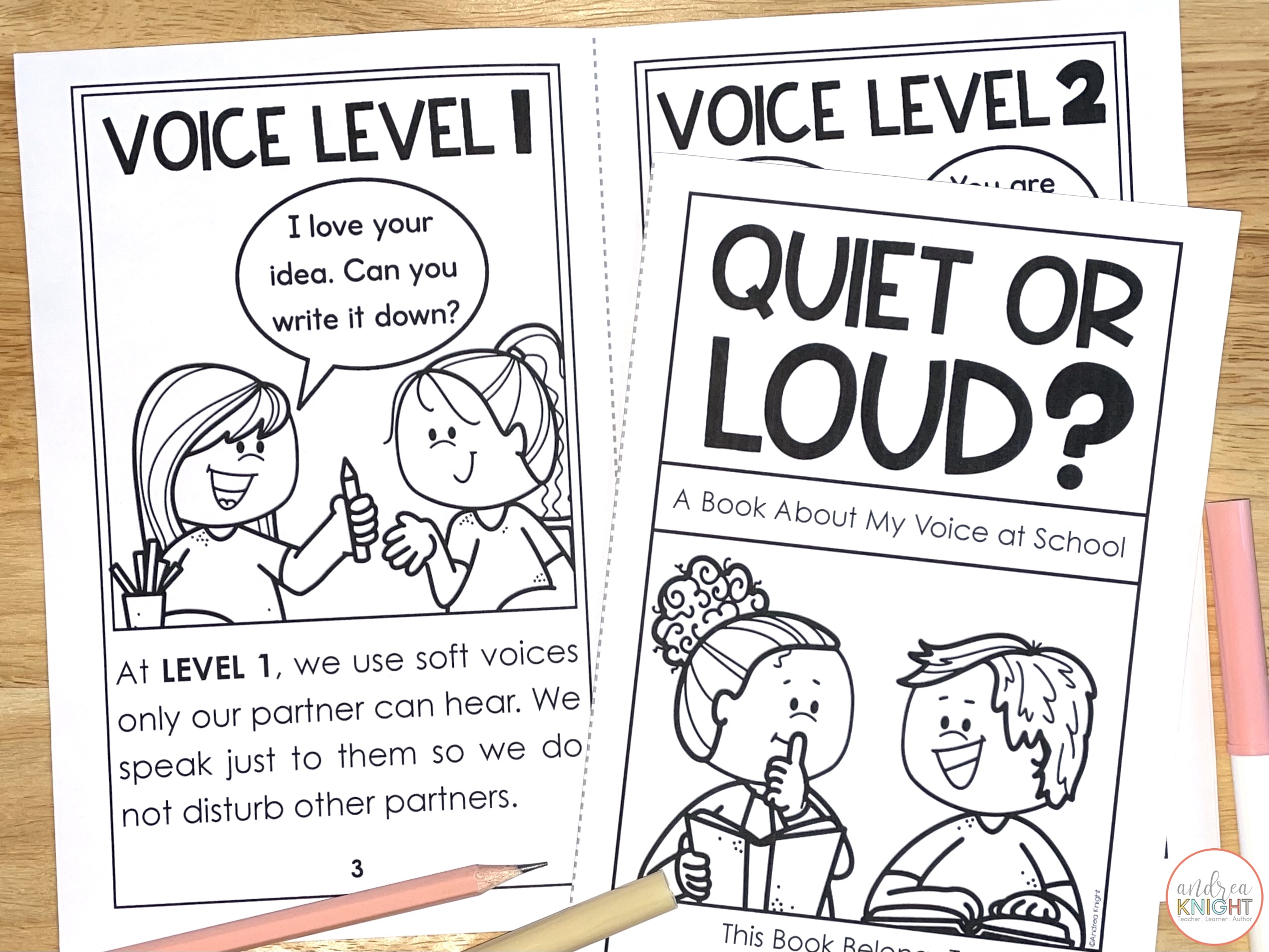
We love THIS BOOK. Each page digs a little deeper into each voice level, explaining how the voice sounds at that level, who should be able to hear it, and why. Instead of just showing kids the cards and hoping for the best, this book gives us a chance to linger longer on this topic so we’re better set up for success.
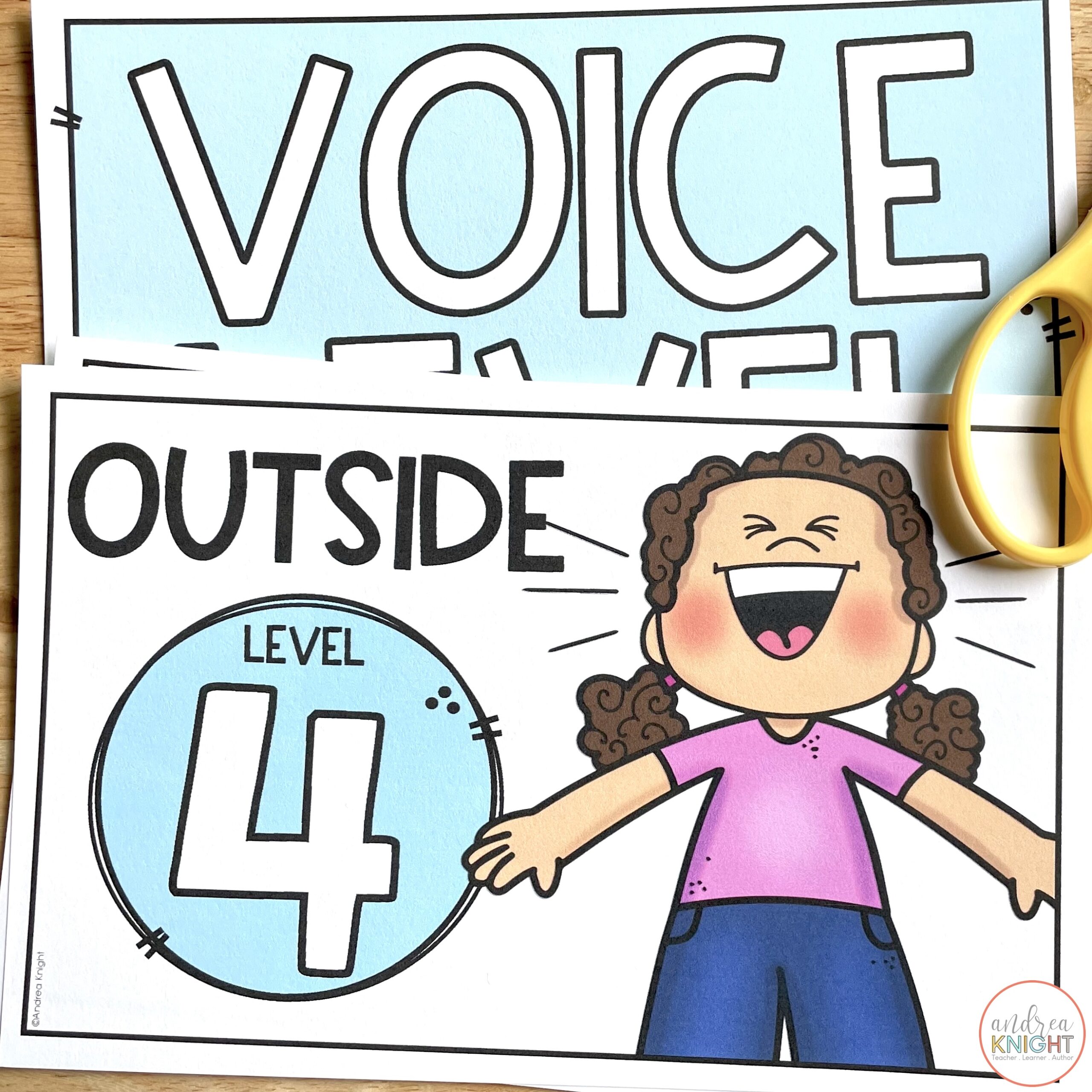
Of course, most kids want to know when they can be loud. I used to think the only answer to that question was, “When we’re playing outside.” And then one child asked, “And if there’s an emergency inside, right?” So yes… we might also be loud if there’s a safety situation happening indoors.
MORE ACTIVITIES FOR UNDERSTANDING NOISE
As you’re planning your lessons around voice levels, consider some of these ideas. They’re fun and get kids thinking actively about how to regulate their voices in a variety of settings.
- Go on a Voice Level Rollercoaster – Invite the children to move their voices up and down like a rollercoaster. Start at level zero and slowly climb up the track to level four, then race back down from loud to quiet sounds. Raise and lower your hands to show the changes in volume, having students match their voice levels to your hands. This activity helps kids connect physically and visually to the abstract concept of volume.
- Role Play with Stuffed Animals – Bring a few stuffed animals to school, or ask the children to bring in their own. Let them teach their animals how to speak during different parts of the day, focusing on which voice level is appropriate and modeling it out loud for them. Role reversal and imaginative play help children internalize expectations in a safe and lighthearted way.
- Sort by Scenario – Make a set of cards showing different classroom and school scenarios. Then, challenge students to sort them into categories based on which voice level they think fits best. This can be done as a whole-group pocket chart activity or in small collaborative teams. It reinforces the understanding of where and when different voice levels are appropriate.
A FEW NOISY BOOKS
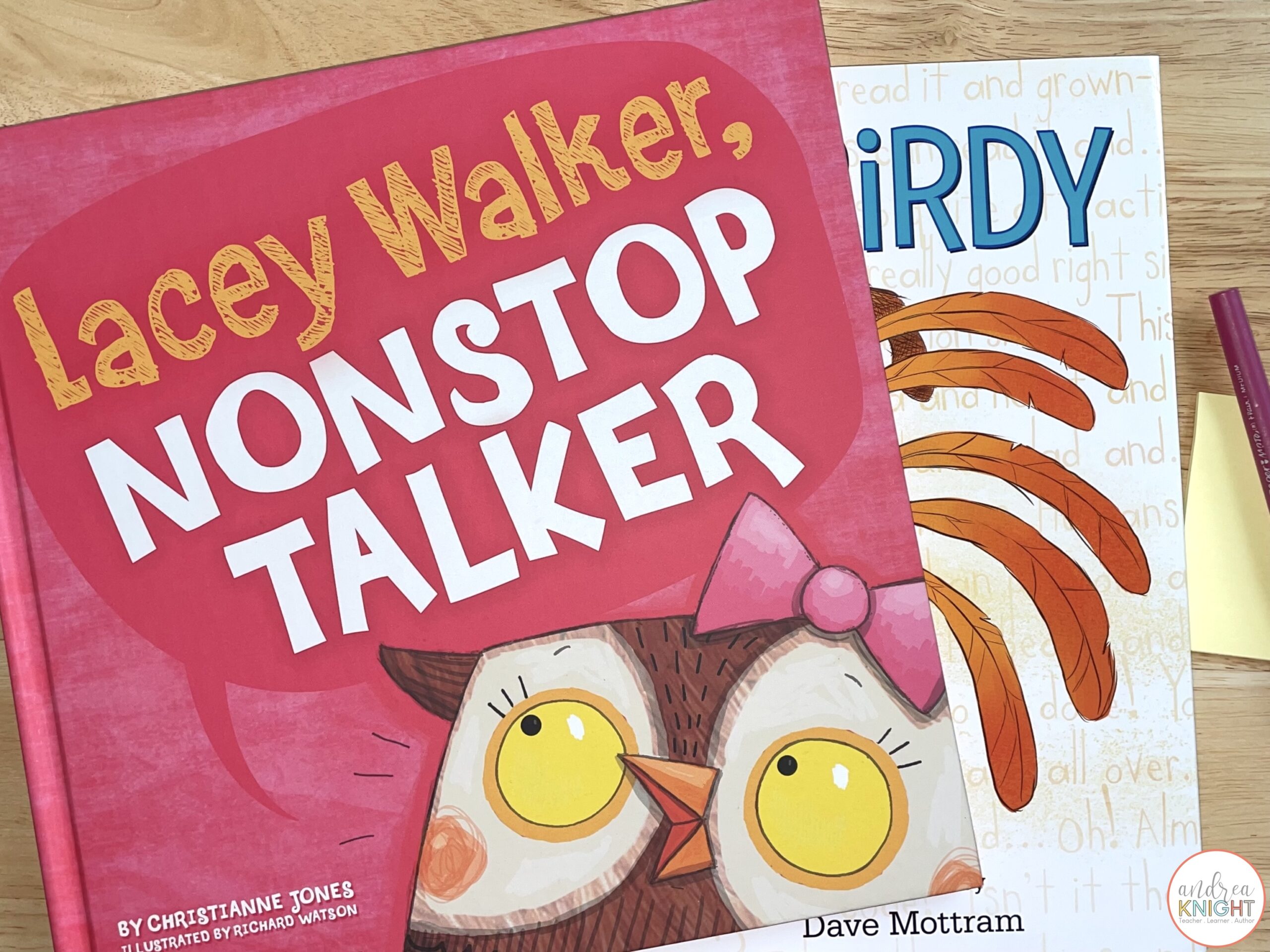
We usually tie everything together with picture books. Often, they can get an idea across better than we can. If you’re looking for a few good titles on the topics of yelling, interrupting, chattiness, and so on, check these out:
- Decibella and Her 6-Inch Voice by Julia Cook
- Lacey Walker, Nonstop Talker by Christianne C. Jones
- Interrupting Chicken by David Ezra Stein
- Wordy Birdy by Tami Sauer
- My Mouth Is a Volcano by Julia Cook
- Quiet Please, Owen McPhee by Trudy Ludwig
- Howard B. Wigglebottom Learns to Listen by Howard Binkow
Hopefully, you found an idea or two that will work in your classroom. If you’re interested in other posts and resources about classroom management, bookmark these to check out later.👇
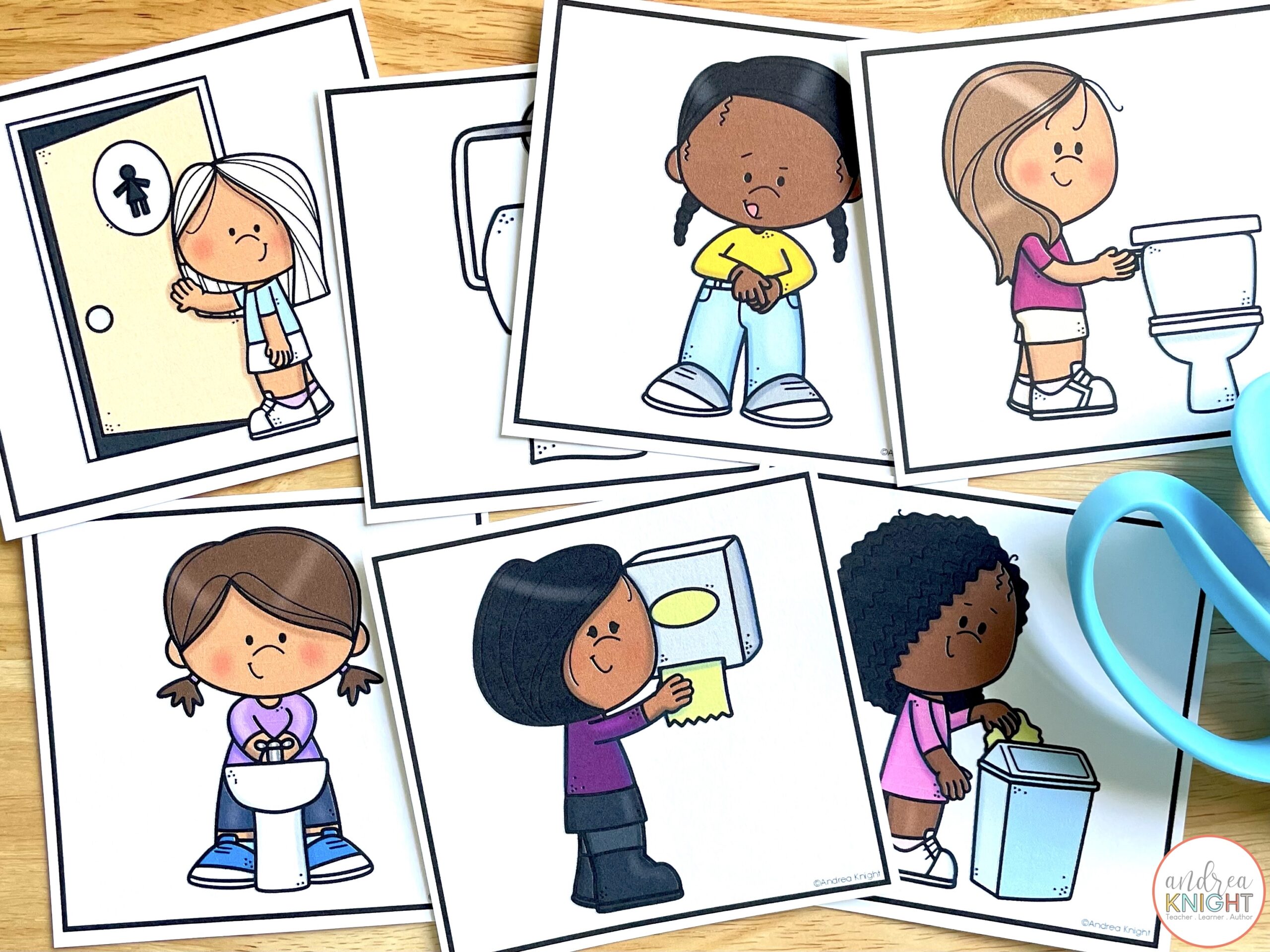
BATHROOM SIGNS FOR CHILDREN
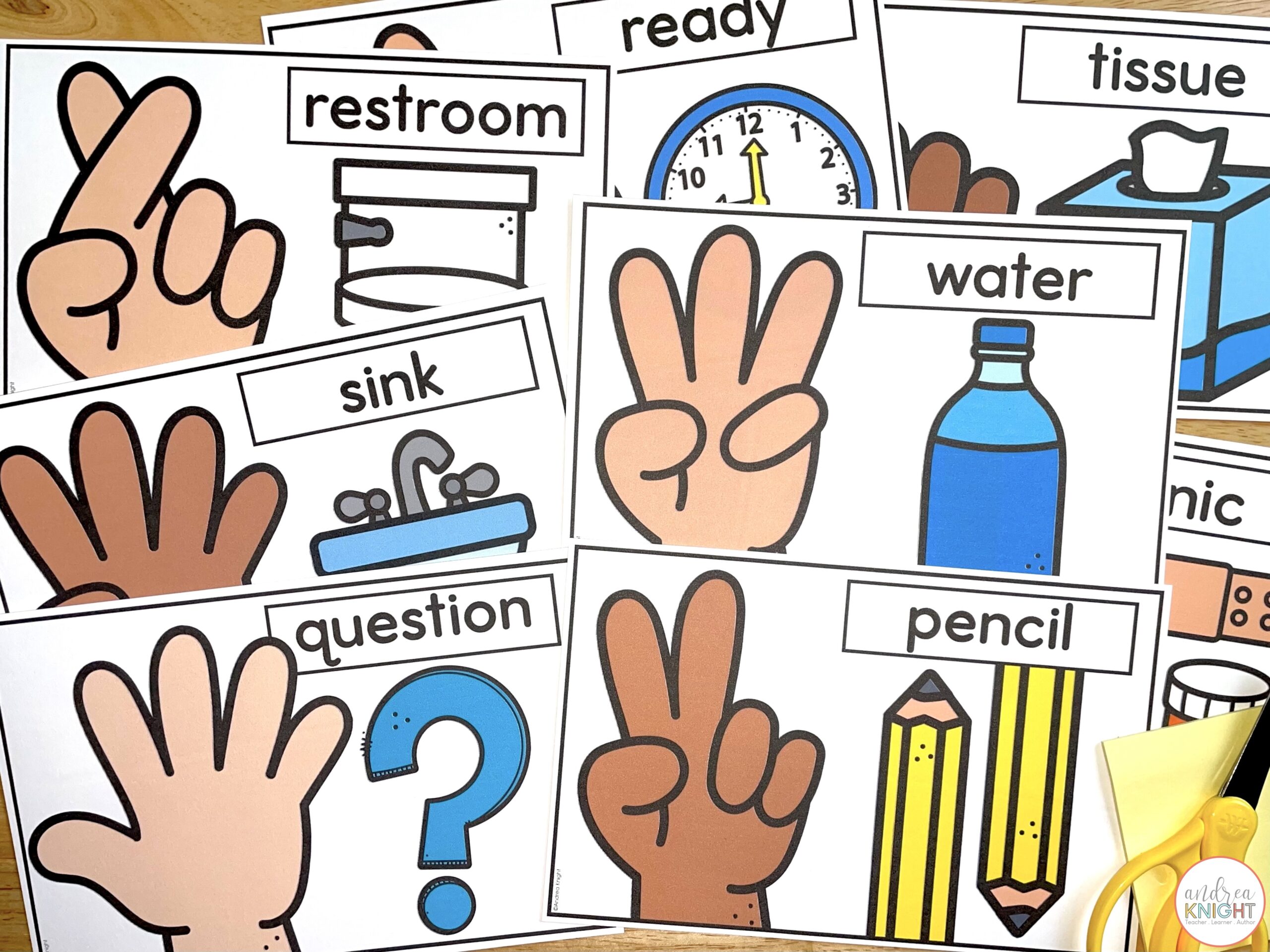
HAND SIGNALS FOR THE CLASSROOM
Happy teaching!